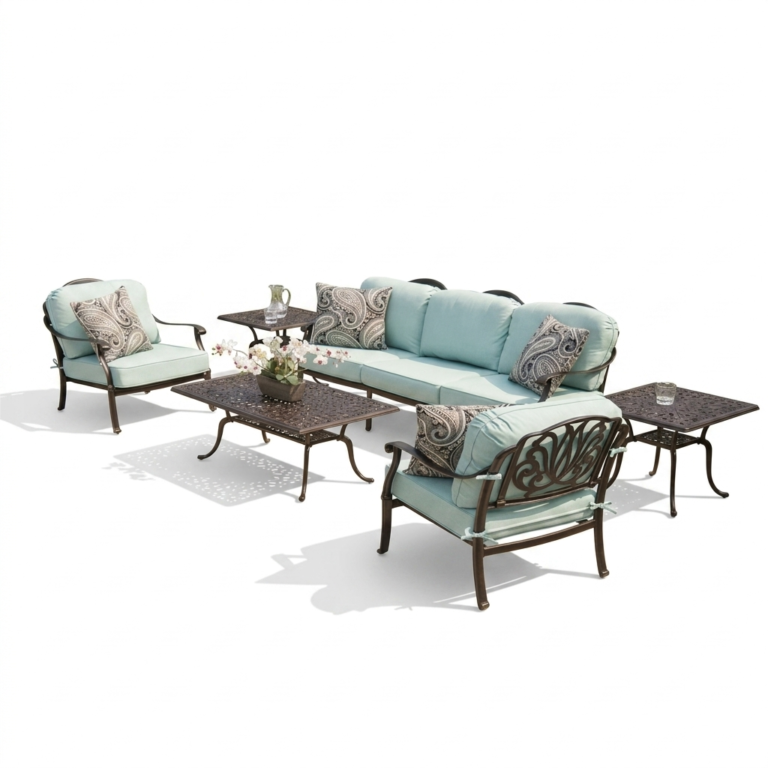
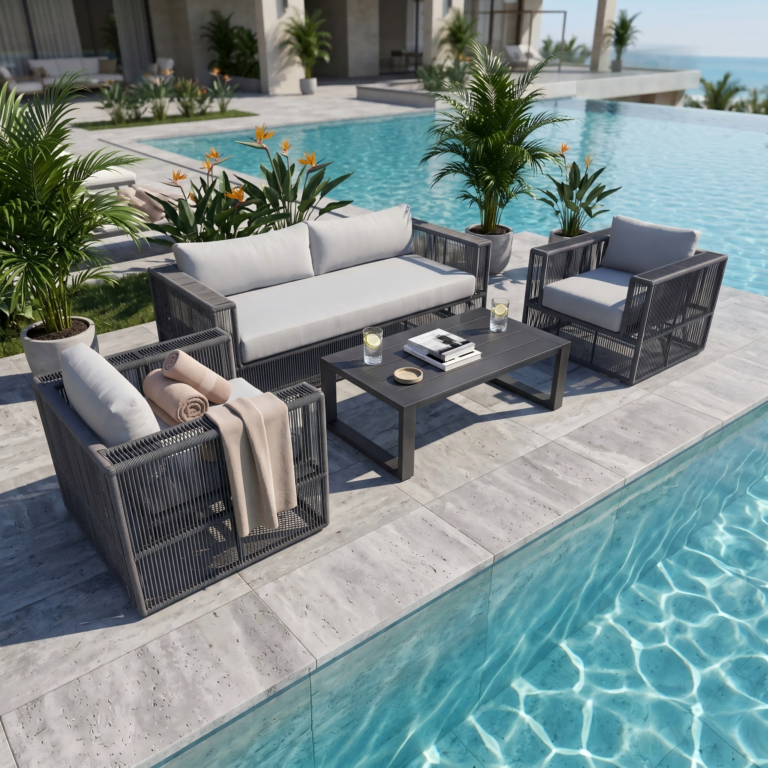
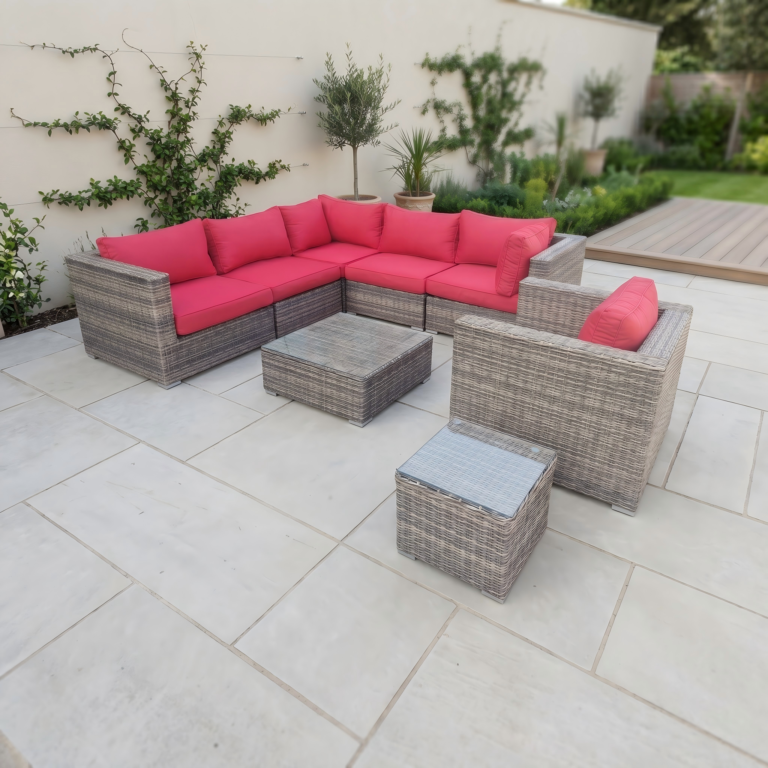
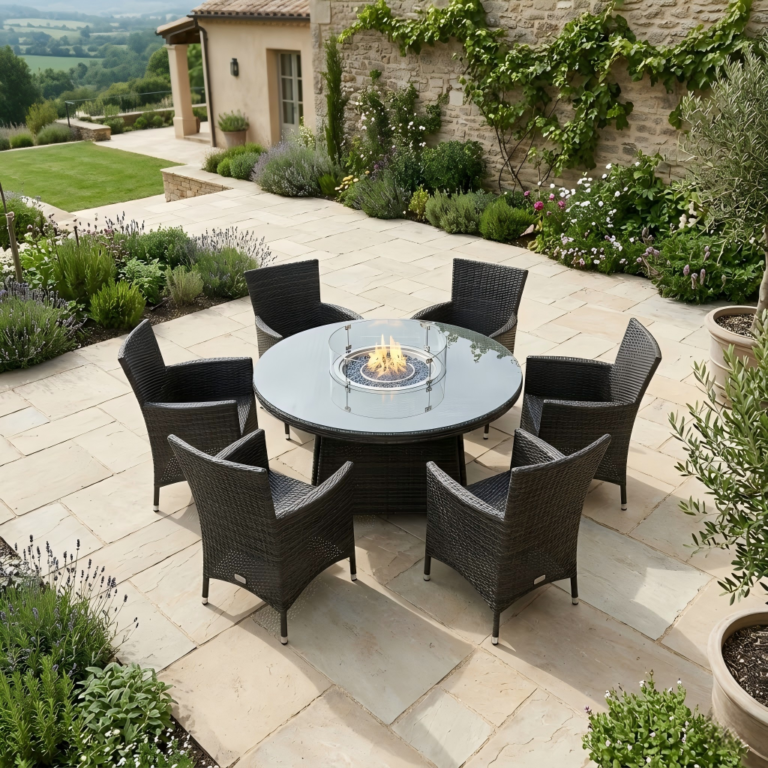
outdoor furniture materials should help wholesalers, retailers, hospitality teams, contractors and importers make a defined sourcing decision. Outdoor furniture materials should be selected by environment, traffic, cleaning, appearance, maintenance, target life, repair approach and price position. Material names alone do not define performance. Buyers need model-level details for grade or construction, thickness where relevant, finish system, fasteners, weave or rope structure, fabric, foam, tabletop and care.
Yoho Outdoor should connect material education to specification and sampling. Aluminum, wood, synthetic rattan and rope can all fit commercial programs when the exact construction matches the use case. The buyer’s responsibility is to define climate and use conditions; the supplier’s responsibility is to identify the relevant model options and evidence without making universal durability claims. This updated outdoor furniture materials guide keeps the existing indexed URL and gives each buyer question a direct, model-aware answer.
- How should buyers use outdoor furniture materials?
- How should buyers compare outdoor furniture materials?
- When is aluminum a practical frame choice?
- How should wood, rattan and rope be specified?
- What should buyers check in cushions and tabletops?
- How does commercial outdoor furniture materials fit the sourcing workflow?
- What belongs in a outdoor furniture materials RFQ?
- What proof should a buyer review before ordering?
- Frequently asked questions about outdoor furniture materials
- Related Yoho Outdoor resources
- Request a decision-ready proposal
How should buyers use outdoor furniture materials?
outdoor furniture materials is most useful when the purchasing team connects the article to a brief, named models and an approval process. The buying decision should state the destination market, buyer channel, intended use, quantity, customization, evidence, packing and delivery target. That information lets Yoho Outdoor discuss current options without turning planning assumptions into promises.
| Decision area | Buyer use | What to verify |
|---|---|---|
| Powder-coated aluminum | Low-mass frame programs and many commercial styles | Alloy/construction, welds, pretreatment, coating and drainage |
| Outdoor wood | Natural appearance and premium ranges | Species, sourcing claim, joinery, finish and maintenance |
| Synthetic rattan or rope | Woven texture and design flexibility | Material formulation, tension, attachment, UV evidence and repair |
| Fabric, foam and tabletop | Comfort and contact surfaces | Performance scope, cleaning, water management and replacement |
How should buyers compare outdoor furniture materials?
Compare outdoor furniture materials against the same use-case criteria, not different marketing labels. Create a matrix for climate, exposure, traffic, cleaning, storage, maintenance, desired appearance and target price. Then evaluate the complete model. A strong frame with an unsuitable cushion or tabletop still creates a poor product decision.
- Define the environment before the material.
- Review the complete material stack.
- Ask for care and replacement information.
When is aluminum a practical frame choice?
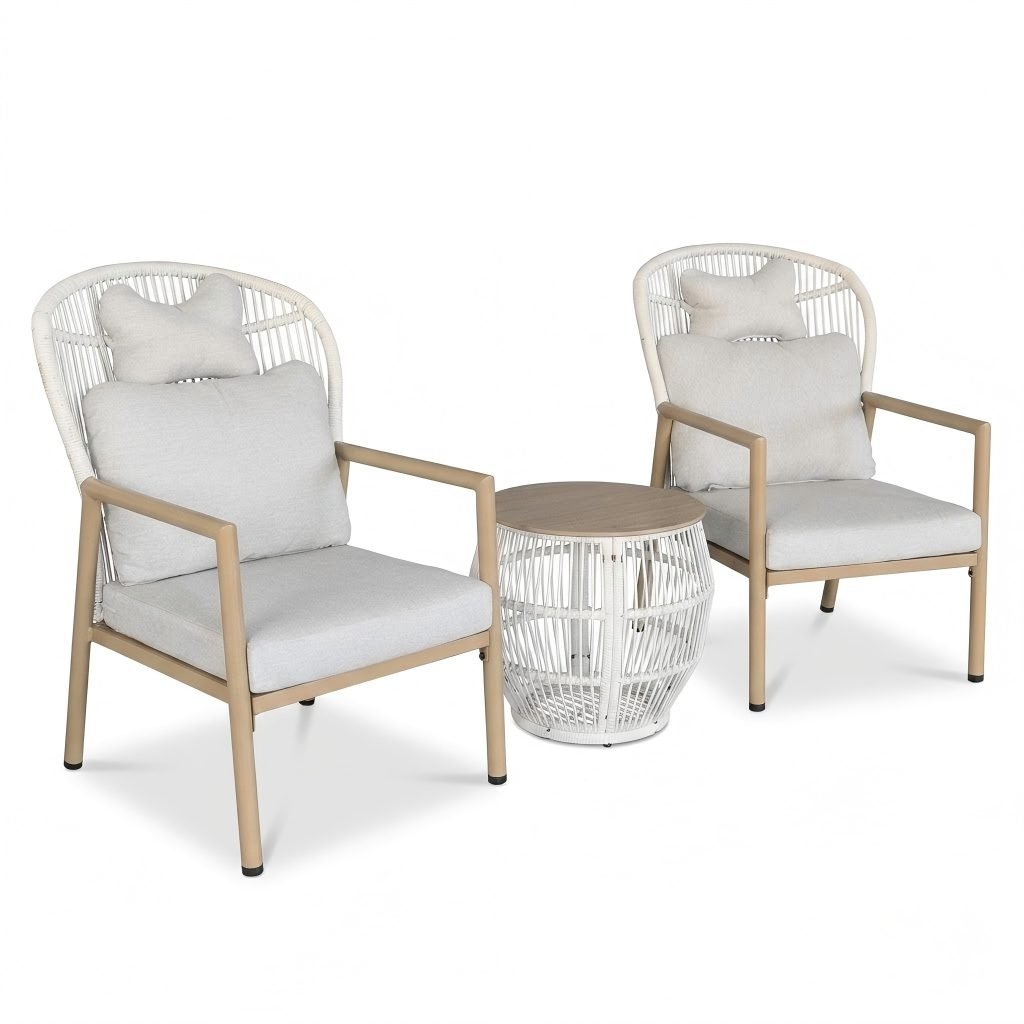
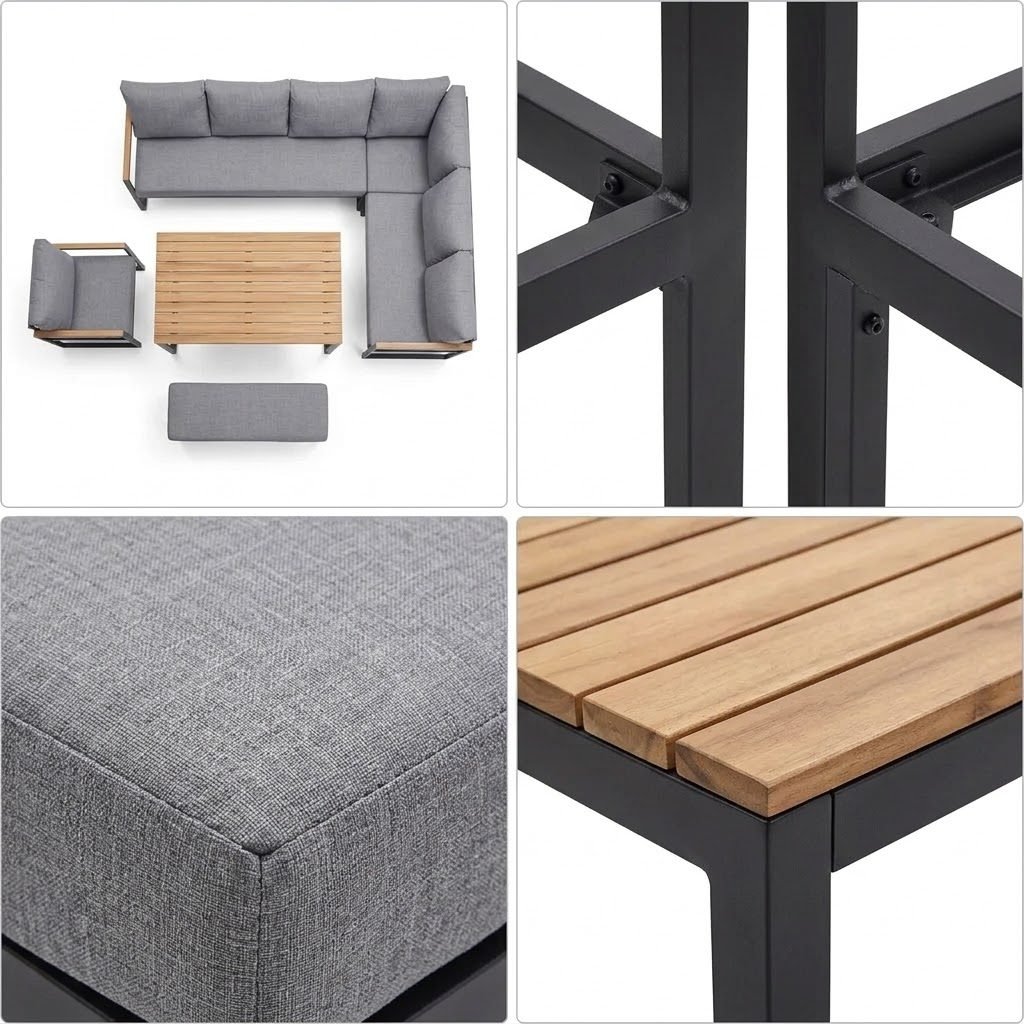
Aluminum is practical where buyers value lower frame weight, broad styling and corrosion-resistant construction when properly specified. Ask how the frame is formed and joined, how moisture drains, what surface preparation and powder coating system is used, and how hardware is isolated. Inspect weld finish and stability on the sample. Do not equate the word aluminum with one quality level.
- Confirm construction and finish scope.
- Inspect welds, drainage and contact points.
- Match the model to traffic and loading expectations.
How should wood, rattan and rope be specified?
Wood, synthetic rattan and rope need precise source, construction and care descriptions. For wood, confirm species, moisture and finish expectations, joinery and maintenance. For woven materials, confirm composition, profile, reinforcement, attachment, tension and available repair method. Ask how colour or texture variation will be controlled across the order.
- Approve colour and texture references.
- Check attachment and high-wear areas.
- State acceptable natural variation where relevant.
What should buyers check in cushions and tabletops?
Cushions and tabletops often determine daily complaints, cleaning time and replacement cost. Review fabric performance scope, seam construction, zipper access, foam build, water release, base support and care. For tabletops, check edge protection, fixing, thermal/use limits, carton protection and replacement availability. Use a sample to test the buyer’s real cleaning process.
- Inspect hidden surfaces and fasteners.
- Confirm removable and replaceable components.
- Approve packaging for fragile or finished surfaces.
How does commercial outdoor furniture materials fit the sourcing workflow?
commercial outdoor furniture materials should connect product selection with the full wholesale buying path. Use the following sequence and keep a dated record of each approval:
- Step 1: Define climate, exposure, traffic and maintenance ability.
- Step 2: Shortlist models and collect complete material specifications.
- Step 3: Compare material systems against the same criteria.
- Step 4: Review samples, care instructions and packaging.
- Step 5: Approve model-level claims and replacement inputs before ordering.
What belongs in a outdoor furniture materials RFQ?
A useful RFQ for an outdoor furniture material specification should include the following inputs. Missing information can be marked as open, but it should not be silently guessed:
- climate and exposure
- residential or commercial use
- traffic and cleaning pattern
- preferred frame and surface materials
- care and replacement expectations
- models, quantity and price position
Yoho Outdoor can use these inputs to qualify the request, recommend current models, identify sample needs and prepare the next commercial step. This is how outdoor furniture materials supports lead quality rather than attracting only general traffic.
What proof should a buyer review before ordering?
Proof should be current, model-specific and traceable. For an outdoor furniture material specification, the review file should contain:
- complete material specification
- sample and colour reference
- construction close-up images
- care instructions
- model-level test or supplier evidence where available
Use external references for general rules, then apply them to the actual product and market. ISO 14025 environmental declarations provides a useful reference at https://www.iso.org/standard/14025. The buyer remains responsible for destination-specific legal, customs, installation and compliance advice.
Frequently asked questions about outdoor furniture materials
What are the best outdoor furniture materials?
There is no single best material. The right choice matches climate, traffic, maintenance, appearance, target life and price position.
Is aluminum always rust-proof?
Aluminum does not rust like iron, but model performance still depends on construction, surface treatment, coating, hardware, drainage and exposure.
Is synthetic rattan suitable for commercial use?
It can be, when the exact material, weave, frame, attachment and maintenance plan fit the traffic and environment.
What should buyers request from Yoho Outdoor?
Request the model-level frame, finish, weave or rope, fabric, foam, tabletop, care, packaging and available evidence.
Related Yoho Outdoor resources
- outdoor sofa sets wholesale
- commercial rattan dining guide
- commercial furniture standards
- request material specifications
Request a decision-ready proposal
Request a model-level material comparison based on your climate, traffic, maintenance and target product category. Include outdoor furniture materials in the inquiry subject so the product and sourcing team can route the request correctly. For questions about commercial outdoor furniture materials, identify the models, market and decision deadline.
Contact Yoho Outdoor for a wholesale, OEM/ODM, sample or project discussion.